Warsaw (online), 11 – 15 July 2022
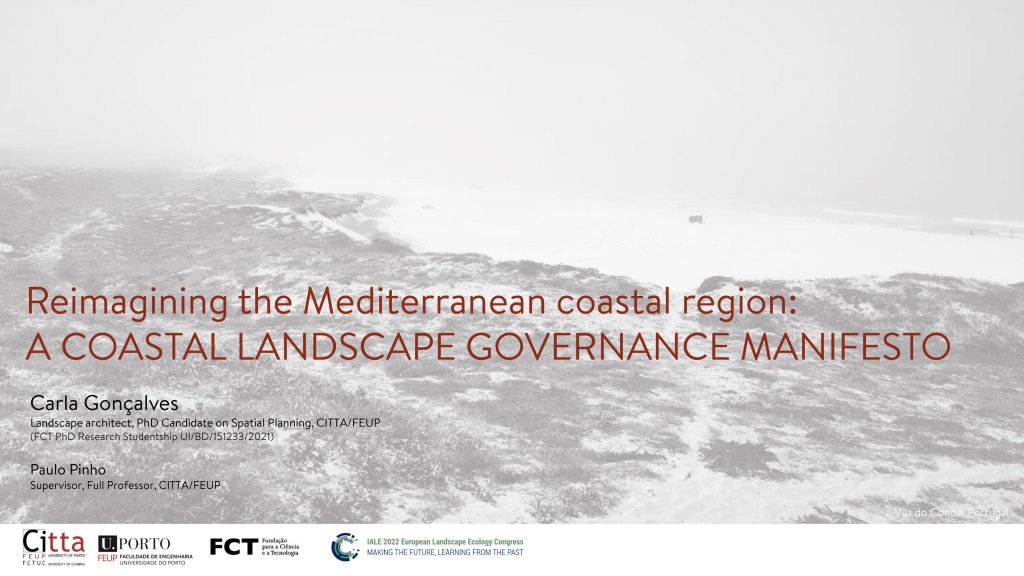
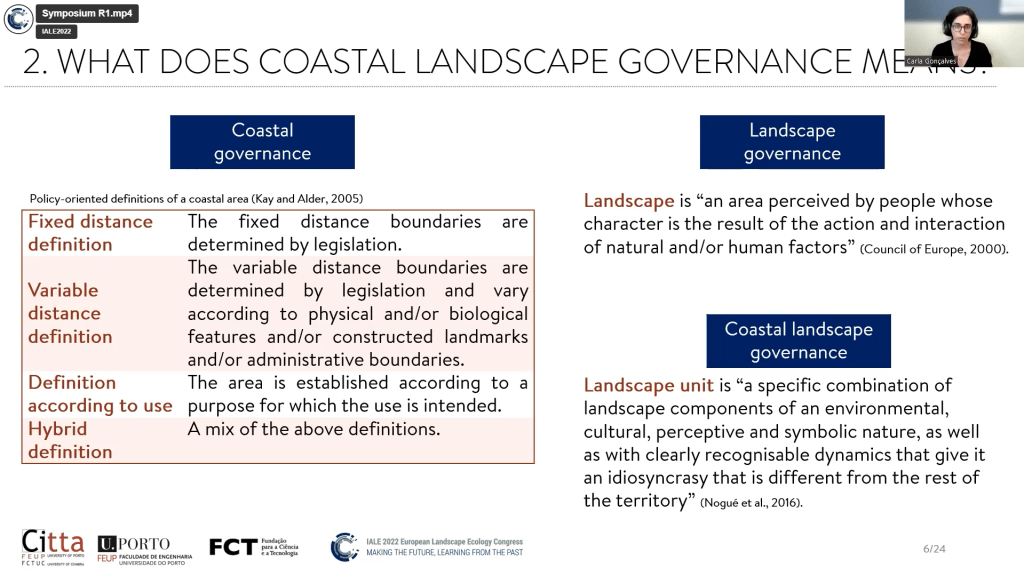
In the literature, landscape approaches are discussed as the next generation of integrated approaches. Reed et al. (2020) claim that the two main premises that differentiate them are working at the landscape scale and the trade-offs identification, negotiation and accounting. Various international institutions (e.g. FAO, IUCN, WWF) have been encouraging landscape approaches implementation on the ground to conciliate preservation and development, especially in developing countries (Arts et al., 2017). Indeed, the debate has mainly been centred in the Global South on forest landscape restoration, revealing the need to expand the discussion to other geographical contexts (Ros-Tonen et al., 2018). This symposium is an opportunity to broaden this debate to the Mediterranean Region. However, addressing the close relationship between landscape approaches and the landscape governance debate is also fundamental. The systematic conceptualisation of landscape governance was introduced in the literature in 2007 (Görg, 2007). The synergies between the concepts were rapidly recognised, and, today, landscape approaches are the predominant approach to operationalise landscape governance. This article takes this relation as a starting point to conceptually explore the synergies between both debates, expanding and linking the discussion with the coastal planning debate. Mediterranean coastal landscapes are highly susceptible and vulnerable to a range of driving forces and pressures with a complex governance structure. Climate change projections intensify it. It is time to reimagine Mediterranean coastal landscape governance and the institutions that govern them to effectively and efficiently address the societal challenges ahead. Indeed, the scientific literature on coastal landscape governance is almost non-existent. This article explores the concept of coastal landscape governance, and it presents a manifesto to stimulate a commitment for its research on a theoretical and empirical domain to safeguard and enhance the coastal socio-ecological system.
Funding
Carla Gonçalves was funded by the Portuguese Foundation for Science and Technology (FCT) through the Doctoral Grant UI/BD/151233/2021.
Click here to download the Book of Abstracts.

 Home
Home 